
Productscpzx

1. Product Introduction
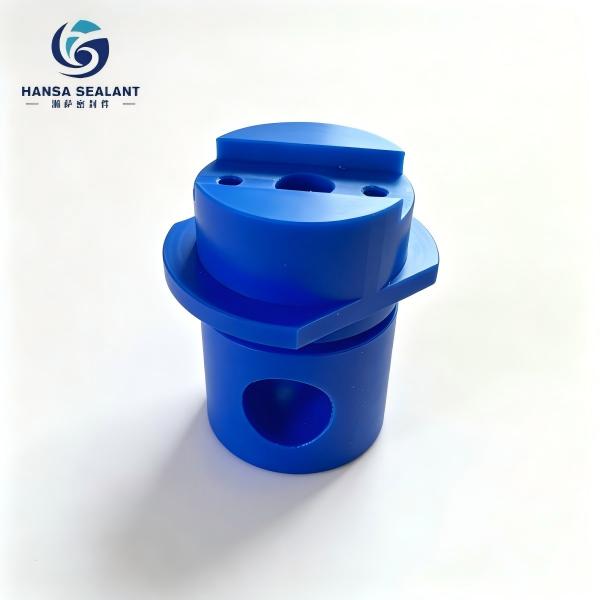
These precision-machined POM components are custom-built for food filling equipment, fabricated from POM rods via integrated CNC turning-milling processes. As illustrated in the photo, they function as transmission, positioning and adapter assemblies within filling mechanisms. Designed with composite structures such as positioning slots, assembly through-holes, limiting steps and side flow holes, the parts feature high dimensional accuracy and smooth, burr-free surfaces. Applied for bottle separation, metering, valve group and conveyor positioning stations on filling machines, they are safe for direct food-medium contact and comply with food hygiene standards. Replacing metal parts, they realize lightweight design and low-friction operation to reduce equipment wear and stabilize filling performance.
2. Core Performance Features
2.1 Food-grade Safety: Food-contact approved POM raw material is optional with no substance precipitation, suitable for beverage, sauce and liquid-food filling scenarios.
2.2 Excellent Wear Resistance & Self-lubrication: Low friction coefficient permits operation without extra lubricant. High-speed reciprocating movement on filling machines runs smoothly with low noise and no jamming.
2.3 Superior Dimensional Stability: Minimal water-absorption-induced deformation under humid cleaning conditions, which preserves positioning precision and avoids metering deviation.
2.4 Impact & Fatigue Resistance: Resists cracking and chipping under frequent start-stop cyclic operation of filling equipment for extended service life.
2.5 Resistance to Cleaning Chemicals: Tolerates common CIP-in-place detergents and weak acid-alkali disinfectants to fit hot-water rinsing and disinfection cycles.
2.6 High-precision Machinability: CNC machining realizes complex irregular grooves, steps and multi-hole composite structures with tight tolerance and good interchangeability for assembly.
2.7 Light-weight Property: Much lighter than stainless steel, lowering transmission load and equipment energy consumption.
3. Material Types & Specification System
Material Types
Material Grade
Description
Applicable Filling Working Conditions
Homopolymer POM (POM-H)
High hardness, high rigidity and outstanding wear resistance; food-grade grade available for direct food contact
High-speed positioning parts, cams, sliding blocks, positioning sleeves
Copolymer POM (POM-C)
Better toughness, superior hydrolysis and hot-water resistance versus homopolymer POM
Filling valve assemblies subject to frequent CIP hot-water cleaning
Modified POM (PTFE / silicone filled)
Further reduced friction coefficient for superior self-lubrication
High-speed rotating and dry-running friction stations
Specification System
• Base stock: Solid POM rods, blue (as shown in picture) or natural white for option
• Manufacturing: CNC turning-milling composite machining, not injection molding
• Dimensions: Customized per customer drawings for outer diameter, bore size, groove width and step height
• Tolerance: Standard ±0.02~±0.05 mm; ±0.01 mm available for precision stations
• Surface: Original smooth machined finish without pores or shrinkage cavities; deburring and chamfering service available
4. Technical Parameters & Performance Indicators
Typical data for food‑grade copolymer POM for reference
Item
Performance Index
Density
1.41 g/cm³
Continuous Operating Temperature
-40℃ ~ +100℃, short‑term peak up to 120℃
Dry‑friction Coefficient
0.15‑0.30
Tensile Strength
≥60 MPa
24‑h Water Absorption
≤0.2%
Food Contact
Food‑contact compliance achievable by specifying food‑grade raw material
Chemical Resistance
Resistant to weak acids & alkalis, detergents, alcoholic drinks and vegetable oil; avoid strong oxidants and concentrated strong acids
Machining Tolerance
Standard ±0.03 mm; precision customized ±0.01 mm
5. Typical Application Fields
5.1 Liquid‑food filling lines: Positioning sleeves, guide shaft sleeves, bottle‑pushing blocks and valve‑adapter components for drinking‑water, beverage, wine and juice filling equipment.
5.2 Sauce & paste filling equipment: Sliders for metering mechanisms, pusher assemblies and limit cams for ketchup, honey and thick‑sauce fillers.
5.3 Dairy filling: Wear‑resistant transmission parts for milk and yogurt filling machines under CIP cleaning conditions.
5.4 Packaging machinery: Bottle separating positioning inserts, conveyor limit blocks and transmission cushion blocks for capping machines.
5.5 Daily‑chemical filling: Non‑food‑contact transmission & positioning components for laundry‑liquid and hand‑soap filling machines.
6. Processing, Connection & Installation Guidelines
Processing
6.1.1 Adopt food‑grade POM rod as raw material for CNC turning‑milling. Use sharp cutting tools with sufficient cooling to prevent local overheating and material melting.
6.1.2 Thoroughly remove burrs and chips after machining. Parts for food‑contact service shall be thoroughly cleaned to eliminate residual processing oil.
Connection Methods
6.2.1 Press‑fit assembly: POM features higher thermal expansion than metal. Keep interference within 0.01‑0.03 mm. Forbid forced brute‑force pressing.
6.2.2 Screw fastening: Brass threaded inserts are recommended. Direct tapping on POM body for repeated screwing is not advised. Apply controlled tightening torque to prevent thread cracking.
6.2.3 Dowel pin positioning: Use cylindrical locating pins with 0.02‑0.04 mm fitting clearance. Interference‑fit pins are not recommended.
Installation
6.3.1 Clean parts and mounting bases prior to assembly, free from metal chips and contaminants.
6.3.2 Never expose components to open fire or high‑temperature baking.
6.3.3 Execute CIP cleaning procedure before commissioning for food‑contact surfaces.
7. Selection Decision Matrix
Working Condition
Preferred Material
Remarks
Direct food contact & frequent hot‑water CIP cleaning
Food‑grade copolymer POM‑C
Superior hydrolysis resistance against hot‑water ageing
High‑speed dry friction & frequent reciprocating motion
PTFE‑filled modified POM
Minimize wear and extend service life
High‑rigidity positioning cams with rare hot‑water exposure
Homopolymer POM‑H
Optimal rigidity and wear performance
Cost‑priority, non‑food‑contact application
Standard copolymer POM‑C
Satisfy basic transmission and wear‑resistance requirements
Long‑term operating temperature >105℃
PEEK is recommended instead of POM
POM suffers accelerated ageing at high temperature
Caution: Not suitable for concentrated nitric acid, strong bleaching agents or long‑term immersion in high‑temperature steam.
8. Customized Industry Solutions
8.1 Custom drawing machining: CNC turning‑milling for complex multi‑hole, stepped and slotted structures based on customer 2D / 3D drawings.
8.2 Food‑compliant version: Food‑contact raw material option with clean factory packaging free from processing oil contamination.
8.3 Friction‑optimized modified parts: PTFE / silicone filled POM for high‑speed non‑lubricated working stations.
8.4 Quick sampling for small batches: Fast prototype validation for filling‑machine modification and technical retrofitting projects.
8.5 Color customization: Blue, white and other identification colors for easier spare‑part maintenance on equipment.
8.6 Tolerance upgrade: Tighter dimensional tolerance for metering‑critical components to secure filling accuracy.
9. Storage & Maintenance
Storage
9.1.1 Store indoors under normal temperature and dry conditions. Avoid direct sunlight and heat sources; storage ambient temperature shall not exceed 60℃.
9.1.2 Keep dust‑proof and moisture‑proof packaging to prevent dust and metallic particles adhering to part surfaces.
9.1.3 Do not store together with strong oxidants or strong‑acid chemicals.
On‑site Maintenance
9.2.1 POM parts generally require no lubrication. Only food‑grade grease shall be adopted if lubrication is necessary.
9.2.2 Neutral or weakly alkaline detergents are allowed for CIP cleaning. Avoid long‑time exposure to high‑concentration bleaching agents.
9.2.3 Periodically inspect wear conditions including grove / bore abrasion and edge chipping. Replace components promptly when excessive clearance or abnormal noise occurs.
9.2.4 Prevent continuous long‑time steam immersion which accelerates POM ageing.
10. Development Trends
10.1 Upgraded food‑safety requirements: Stricter food‑industry regulations promote wider adoption of food‑grade POM machined parts as alternatives to ordinary engineering plastics and partial metal components.
10.2 Growing popularity of modified composite POM: PTFE and solid‑lubricant filled POM meets demands for higher rotating speed and maintenance‑free operation of filling machines.
10.3 Integrated high‑precision machining: Multiple discrete small parts are consolidated into single complex POM machined workpieces to reduce assembly points and equipment failure risks.
10.4 Light‑weight equipment design: Light‑weight wear‑resistant plastic components become preferred design choice for high‑speed filling machinery.
10.5 Clean‑able design for green production: Optimized hydrolysis‑resistant material performance to match high‑standard CIP / SIP requirements for food and pharmaceutical industries.
11. Market Application Expansion
11.1 Pharmaceutical filling equipment: Extended application as wear‑resistant positioning parts for oral‑liquid pharmaceutical filling under clean conditions.
11.2 Aseptic filling production lines: Deployed as non‑pressure‑bearing wear‑resistant transmission components under permitted working conditions.
11.3 Support for export‑oriented filling machinery: Food‑contact compliant POM for overseas‑sold packaging equipment to satisfy international food‑contact standards.
11.4 Retrofit spare‑parts for second‑hand filling equipment: Localized replacement for imported spare parts to cut maintenance procurement cost.
11.5 Complete beverage & beer production‑line supporting: Mass supply for bottle‑separation mechanisms and conveyor‑system wear‑resistant components.
12. Conclusion
Thanks to comprehensive strengths including self‑lubricating wear resistance, stable dimension performance and food‑contact capability as well as good manufacturability for complex structures, precision‑machined POM parts have become indispensable critical wear‑resistant components for food filling equipment. Appropriate selection of homopolymer, copolymer or modified POM grades together with strict processing, installation and maintenance specifications significantly improves operational stability and reduces unplanned downtime of filling equipment.
Targeting diverse filling media, cleaning modes and operating‑speed scenarios, customized material selection combined with precision CNC machining enables domestic substitution for imported spare parts, bringing cost reduction and efficiency improvement for filling machinery.


