
Productscpzx

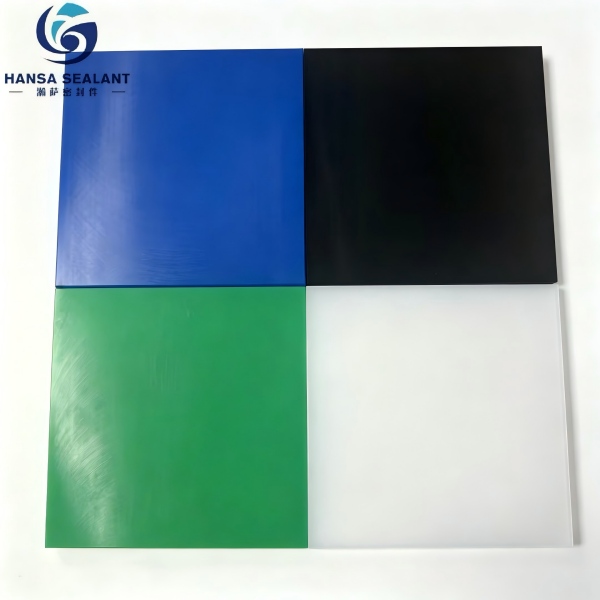
1. Product Introduction
UHMW-PE (Ultra-High Molecular Weight Polyethylene) is a high-performance thermoplastic engineering plastic with a viscosity-average molecular weight of ≥1,000,000.
Main production methods:
1.1 Compression sintering molding (premium mainstream process)
UHMW-PE powder is loaded into molds, sintered under high temperature and pressure for a holding period. Powder particles fuse at interfaces and form solid sheets after cooling and demolding. Sheets produced this way have dense internal structure without pores, retaining complete molecular chains. They deliver superior wear resistance and impact resistance, ideal for thick plates and large-size sheets; this is the preferred process for high-end lining plates.
1.2 Ram extrusion molding
Continuous forming by dedicated ram extruders with higher productivity for thin sheets and long strips. Due to shear effect during extrusion, molecular weight is slightly reduced, so overall performance is inferior to compression sintered sheets.
Due to extremely high melt viscosity, UHMW-PE cannot be processed by conventional screw extrusion. Compression sintering is the core manufacturing technology for UHMW-PE sheets.
2. Physical & Chemical Properties
| Item | Specification / Description |
| Molecular Weight Range | 3,000,000 ~ 9,000,000 |
| Density | 0.94~0.98 g/cm³, much lighter than steel |
| Wear Resistance | Excellent; outperforms carbon steel, brass, common nylon and HDPE |
| Impact Strength | Extremely high, excellent low-temperature toughness, remains impact-resistant down to -200°C, not easy to brittle fracture |
| Friction Coefficient | Low friction & self-lubricating; dry friction coefficient approx. 0.10~0.22 |
| Water Absorption | <0.01%, almost no water absorption, stable dimension under humid conditions |
| Service Temperature | Continuous: -200℃ ~ +80℃; short peak ≤90℃; melting point ~147℃, prone to creep under high temperature |
| Chemical Resistance | Resistant to most acids, alkalis, salt solutions and oils; not resistant to strong oxidizing concentrated acids and aromatic solvents |
| Electrical Property | Base grade has good insulation; standard sheet is non-anti-static; anti-static type is specially modified |
| Machinability | Can be sawed, milled and drilled; not suitable for hot melt welding, low bonding strength, mechanical fixing recommended |
| Creep Performance | Low creep under normal temperature & light load; creep & deformation may occur under high temperature with long-term pressure |
3. Typical Application Fields
| Industry | Application Parts | Function |
| Mining & Bulk Material Handling | Silo, chute, hopper lining, dump truck bed liner | Prevent material sticking & blockage, wear resistance, shock buffering, reduce material buildup and equipment abrasion |
| Food Processing | Conveyor guide rails, food cutting boards, production line backing plates | Low friction, food-contact safe, easy to clean, prevent material adhesion |
| Port & Marine | Dock fender plates, cabin lining, marine sliding blocks | Shock absorption, anti-corrosion & wear resistance, reduce collision impact force |
| Environmental Protection & Water Conservancy | Wastewater tank liner, sludge scraper, gate sliding block | Resist acid & alkali corrosion from sewage, wear resistance, reduce friction of sludge |
| General Machinery | Wear-resistant sliding blocks, guide pads, wear plates | Reduce friction & noise, replace metal, cut maintenance cost |
| Medical | Liner for artificial joints | Biologically inert, low wear, reduce wear debris and extend prosthesis service life |
| Rail Transit | Rail wear pads, buffer sliding blocks | Impact resistance, noise reduction, wear resistance |
| Powder Chemical Industry | Powder silo, pipeline lining (anti-static modified grade) | Anti-sticking for powder, eliminate static accumulation for explosion-proof conditions |
4. Selection & Design Guide
4.1 Grade Selection
| Grade | Molecular Weight | Recommended Working Conditions | Suggested Thickness |
| PE300 (General Industrial Grade) | 3,000,000 | Medium wear, cost priority, common silos & backing plates | 8~20 mm |
| PE500 (High Wear-resistant Grade) | 5,000,000 | Mining, sand & gravel chutes, heavy friction scenarios | 15~40 mm |
| PE800 / PE1000 (Ultra High Impact Grade) | 8,000,000+ | Heavy impact from bulk materials, low temperature & heavy load | 20~50 mm |
| Food Grade UHMW-PE | 3,000,000~5,000,000 | Food production line, meat cutting boards | 10~30 mm |
| Anti-static Modified UHMW-PE | Modified | Coal powder, chemical powder explosion-proof environment | 10~40 mm |
| UV Weather-resistant Modified UHMW-PE | Modified | Outdoor application, dock exposed working conditions | 12~40 mm |
4.2 Standard Sheet Dimensions (custom cutting available)
| Standard Size (L*W, mm) | Available Thickness Range (mm) |
| 1000*2000 | 5~200 |
| 1220*2440 | 5~200 |
| 1500*3000 | 8~150 |
| 2000*4000 | 10~120 |
4.3 Quick Selection Tips
4.3.1 Long-term temperature>80℃: UHMW-PE is not recommended; consider PEEK / PPS instead.
4.3.2 Explosion-proof powder environment: anti-static modified grade must be selected. Standard UHMW-PE cannot prevent static electricity.
4.3.3 Heavy impact from bulk materials: prefer high molecular weight + thicker sheets.
4.3.4 Severe material wall sticking: choose standard low-friction grade.
4.3.5 Long-term outdoor sunlight exposure: use UV weather-resistant modified sheet.
5. Operation & Maintenance
5.1 Operation Notes
5.1.1 Reserve gap for thermal expansion & contraction
UHMW-PE has higher thermal expansion coefficient than steel. Expansion gaps must be reserved during installation. Bolt holes shall be larger than screw diameter; countersunk installation is adopted to avoid arching or cracking caused by temperature change.
5.1.2 Temperature control
Do not use under continuous pressure above 80℃, high temperature will cause creep and deformation.
5.1.3 Machining requirements
Low-speed cutting with sharp cutting tools to avoid melting and sticking due to processing heat. Bonding is not recommended; mechanical fastening is preferred.
5.1.4 Chemical environment
Avoid long-term contact with concentrated nitric acid, strong oxidants and aromatic solvents to prevent aging and cracking.
5.1.5 Avoid sharp point impact
The material has excellent overall impact resistance, but sharp hard objects striking at single point may cause local scratches.
5.2 Maintenance
5.2.1 Regular thickness inspection
Check residual thickness periodically. Replace sheets before reaching critical wear thickness to prevent liner damage and equipment failure, minimizing downtime loss.
5.2.2 Regular silo / chute cleaning
Reduce continuous heavy impact from bulk hard materials and extend service life.
5.2.3 Fastener inspection
Check bolt tightness periodically and retighten in time to prevent sheet edge warping and tearing.
Proper installation + regular maintenance can extend service life by more than 30%, reducing spare parts cost and downtime.
6. Development Trend
6.1 Modified composite materials
Add carbon powder, graphite, flame retardant and other fillers to develop anti-static, flame-retardant, reinforced wear-resistant and antibacterial special grades for segmented industries.
6.2 Upgraded forming technology
Optimize temperature control of compression sintering to reduce internal defects of sheets. Capacity for large-size and ultra-thick integrated forming keeps improving to reduce splicing seams.
6.3 Green raw material direction
Recycled UHMW-PE powder is increasingly applied, balancing performance and low carbon to meet ESG & export environmental audit requirements.
6.4 Integrated precision forming
Manufacturers extend business from simple sheet supply to finished machined parts such as guide rails and liner blocks, providing one-stop solution and lowering clients' secondary processing cost.
6.5 Lightweight & high-performance film development
Highly oriented UHMW-PE materials are under research for protection and lightweight fields, expanding application beyond traditional sheets.
7. Market Application Expansion
7.1 Replacement in traditional industries
Mining, power and building material sectors keep replacing steel and cast iron liners with UHMW-PE to solve wear, material sticking and corrosion problems; stable demand in existing market.
7.2 Growth in new energy
Lithium raw material conveying, anti-static lining for powder silos, meeting requirements of explosion protection and contamination prevention for new energy powder handling, a key emerging market.
7.3 Overseas market growth
Stable demand for bulk material handling and dock fender projects in Europe, America, Southeast Asia and Middle East. Demand for food-grade and anti-static grades keeps rising for export.
7.4 Environmental & water treatment
Wear-resistant liners and scraper pads for sewage & sludge treatment equipment, replacing traditional anti-corrosion materials.
7.5 Lightweight for special equipment
Sliding pads for engineering machinery and rail transit, taking advantage of low density to reduce weight and noise.
8. Summary & Conclusion
With outstanding comprehensive properties including ultra-high wear resistance, superior impact resistance, self-lubrication, chemical resistance and ultra-low water absorption, UHMW-PE sheet is a preferred engineering plastic for heavy-load anti-wear and anti-corrosion applications. It can replace carbon steel, nylon and common HDPE to effectively solve material blockage, equipment abrasion and corrosion issues and cut operation & maintenance cost.
Compression sintered sheets perform better than extruded sheets. A full series of grades with different molecular weight and modification options are available to meet working conditions in mining, food, port, new energy powder and environmental industries. Select grades according to temperature, impact load, chemical medium, explosion-proof or food compliance requirements. Standard installation plus periodic maintenance can maximize material performance.
With continuous iteration of modification technology and precision machining capability, UHMW-PE sheets will further expand application boundaries in new energy, environmental protection and high-end equipment sectors, serving as core material for industrial wear-resistant, anti-corrosion and lightweight solutions.


