
Productscpzx

1. Product Introduction
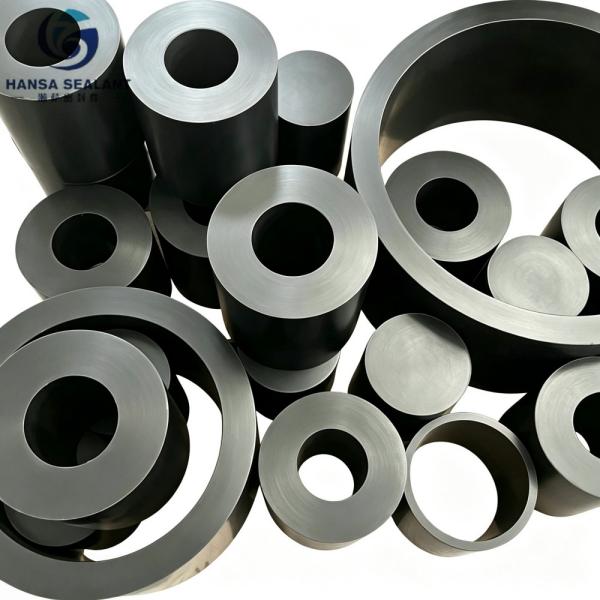
Carbon filled PTFE tube uses virgin polytetrafluoroethylene (PTFE) as the matrix, uniformly blended with carbon black or carbon fiber fillers. It is manufactured through material mixing, preforming, ram extrusion and high-temperature sintering. Compared with pure PTFE, it overcomes the weaknesses of pure PTFE such as easy creep, poor wear resistance and static accumulation. It combines corrosion resistance, self-lubrication, anti-static property and good thermal conductivity. It can be used directly as transfer tubing, or as blanks for turning into bushings, guide rings, sliding seals and other parts for harsh conditions with strong corrosion, flammable & explosive hazards and dynamic friction.
2. Physical & Chemical Properties
Item
Description
Continuous Operating Temperature
-196℃ ~ 260℃, stable over wide temperature range; no brittle failure at low temperature, no melting flow at high temperature
Chemical Resistance
Resistant to most strong acids, strong alkalis, strong oxidants and organic solvents. Not resistant to molten alkali metals and high-temperature fluorine gas. Low swelling and aging tendency
Friction & Wear Resistance
Self-lubricating with low friction coefficient. Far better wear resistance than pure PTFE, suitable for long-term dry friction service
Creep Resistance (Cold Flow)
Carbon fillers restrain PTFE cold flow. Higher compressive strength and rigidity, smaller deformation under long-term pressure to avoid seal leakage
Conductivity / Static Dissipation
Controllable surface resistivity (10⁶ ~ 1011 Ω). Dissipates static electricity to eliminate spark risk. Not insulating
Thermal Conductivity
Higher thermal conductivity than pure PTFE, quickly removes frictional heat to prevent local overheating failure
Water Absorption
<0.01%, non-water-absorbent and non-hygroscopic
Flame Retardancy
UL94 V-0, flame retardant
Machinability
Can be cut, turned and flared. Available with sodium etching surface treatment to improve bonding strength with metal and rubber
3. Typical Application Fields
Industry
Application Position
Core Function
Chemical Industry
Strong corrosive medium pipelines, pump & valve liners, filter pipelines
Anti-corrosion, erosion resistance, static dissipation and substrate protection
Oil & Gas Energy
Additive transfer tubing, downhole sampling lines, compressor bushings
Anti-static & explosion-proof, resistant to hydrocarbon media, wear-resistant for flammable & explosive working conditions
Semiconductor & Powder Handling
Powder conveying lines, high-purity chemical delivery tubing
Dissipate static electricity, prevent powder ignition and electrostatic damage to electronic components
Hydraulic & Construction Machinery
Cylinder bushings, guide rings, sliding bearing blanks
Self-lubricating and wear-resistant, reduce jamming and extend service life of moving pairs
Aerospace
Special fluid pipelines, sliding seal assemblies for airborne equipment
Lightweight, wide temperature resistance, anti-static for severe aerospace environments
Hydrometallurgy & Environmental Protection
Acid/alkali electrolyte pipelines, solid-laden slurry transfer lines
Wear and acid-alkali resistant, reduce pipeline replacement frequency
4. Selection & Design Guide
Grade Selection (by carbon loading)
Grade
Carbon Filling Ratio
Resistivity Range
Application Notes
CF10
10%
10⁹ ~ 1011 Ω
Static corrosive fluid transfer, low-pressure tubing; moderate anti-static requirement, good toughness
CF15
15%
10⁷ ~ 10⁹ Ω
General-purpose grade, balanced wear resistance and static dissipation. Preferred for most chemical pipelines and ordinary bushings
CF20
20%
10⁶ ~ 10⁷ Ω
Dynamic friction, reciprocating / rotary sliding applications; guide rings, piston ring blanks with better thermal conductivity
CF25
25%
10⁴ ~ 10⁶ Ω
High conductivity for explosion-proof and heavy-duty dry friction; oil & gas, powder explosion-proof conveying. Slightly reduced toughness, use cautiously under impact load
Standard Dimension Table
Inner Diameter Range
Wall Thickness Range
Standard Length per Piece
Remarks
φ3 ~ φ10 mm
0.5 ~ 2 mm
500mm / 1000mm
Small-bore precision tubing, small turned components
φ10 ~ φ40 mm
2 ~ 6 mm
500mm / 1000mm
General transfer lines, bushing blanks
φ40 ~ φ100 mm
4 ~ 10 mm
500mm
Large-diameter liners, heavy-wall wear parts
Selection priority: Medium → Continuous temperature → Pressure → Explosion-proof / anti-static requirement → Static transfer or dynamic friction. Do NOT select carbon filled PTFE for insulating applications.
Non-standard ID, wall thickness, length, tolerance and sodium etching treatment are available upon request.
5. Operation & Maintenance
5.1 Installation Design: Deburr and chamfer metal edges at pipe joints. Sharp edges will scratch tubing and cause premature failure. Control proper compression ratio when used as seal bushings; excessive compression accelerates creep and wear.
5.2 Working Condition Control: For heavy load plus high sliding speed, select CF20 / CF25. Lubrication by process medium is recommended if needed to avoid accumulated frictional heat. Carry out sample evaluation in advance for high-temperature strong oxidizing media, to prevent carbon filler oxidation and resistivity drift.
5.3 Static Grounding: Tubing for explosion-proof service must be reliably grounded for continuous static discharge.
5.4 Bonding & Processing: Carbon filled PTFE is chemically inert and hard to bond directly. Choose sodium-etched version if bonding is required.
5.5 Storage & Machining: Store at room temperature away from light; avoid permanent deformation under heavy long-term compression. Use sharp cutting tools during turning or cutting to reduce surface carbon powder shedding.
5.6 Periodic Inspection: Focus on worn sections, joint leakage and continuity of grounding terminals. Replace spare parts proactively to avoid unplanned shutdown.
6. Development Trends
6.1 Filler Refinement: Nano carbon tube and graphene hybrid filling formulas are gaining popularity. Stable conductivity can be achieved at lower loading while retaining good toughness and wear resistance, solving the brittleness issue of high-carbon grades.
6.2 Integrated Forming: Integrally sintered tubing with flanges and flare ends reduces joint leakage points and improves overall pipeline reliability.
6.3 Digital Performance Control: Resistivity, wear rate and creep indicators are tightly controlled batch by batch with inspection reports, to meet certification requirements of semiconductor and new energy industries.
6.4 Green Manufacturing: Low-dust compounding and low-energy sintering processes reduce emissions and comply with global regulations such as REACH and RoHS.
6.5 Composite Structures: Carbon filled PTFE lining combined with fiberglass or metal reinforced outer layers, providing corrosion resistance, static dissipation and higher pressure rating for medium-pressure corrosive pipelines.
7. Market Expansion
Traditional markets of carbon filled PTFE tubing are concentrated in chemical, oil & gas and general hydraulic sealing sectors. New expanding directions:
• New Energy: Lithium battery slurry and electrolyte powder transfer tubing, solvent resistant and anti-static
• Hydrogen Energy: Auxiliary weak-corrosion hydrogen pipelines and valve liners for anti-static & explosion-proof purposes
• Precision Automation: Powder conveying lines and metering pump wear bushings for clean rooms
• Export Supporting: Supplied as standard wear-resistant anti-static tubing spare parts for complete-set equipment manufacturers in Europe, America, Southeast Asia and the Middle East
• Material Replacement: Substitute bronze, nylon and common rubber bushings for applications combining strong corrosion and static hazards
8. Summary & Conclusion
Carbon filled PTFE tube is a modified fluoroplastic tubing integrating corrosion resistance, self-lubrication, anti-static property, thermal conductivity and wear resistance. It remedies the inherent drawbacks of pure PTFE including severe cold flow, static accumulation and insufficient wear resistance, suitable for various harsh corrosive, flammable & explosive and dynamic friction conditions.
With customizable carbon loading formulas, stable extrusion & sintering technology and flexible custom sizing, it covers applications from low-pressure static transfer to heavy-duty sliding sealing. As new energy and precision powder industries grow, its application boundaries keep expanding. Proper grade selection, standardized installation & grounding and routine maintenance can effectively cut spare part consumption, lower leakage and ignition risks, and deliver reliable material solutions for stable long-term equipment operation.


