
Productscpzx

1. Product Introduction
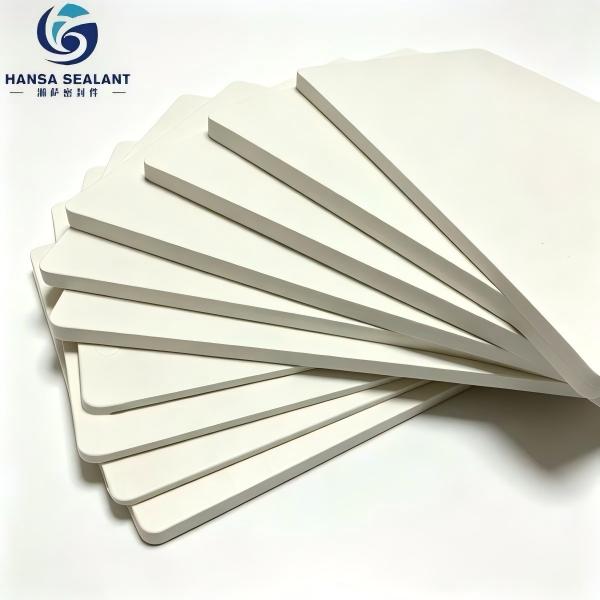
Ceramic-filled PEEK plate is a high-performance engineering plastic sheet modified by compounding polyether-ether-ketone (PEEK) base resin with ceramic powder fillers. It combines the excellent toughness, heat resistance and machinability of PEEK with the high hardness, wear resistance, low-friction and anti-creep properties of ceramic materials.
Different from unfilled PEEK, glass-fiber-filled or carbon-fiber-filled PEEK, ceramic-modified PEEK is optimized for wear performance, dimensional stability and chemical resistance, with reduced friction and less abrasion against mating counterparts. It can replace selected metal and ceramic components, and is widely used in precision machinery, semiconductors, medical devices and fluid-handling equipment. It can be directly machined into gaskets, sliding blocks, insulating components, wear-resistant bushings and positioning tooling parts.
2. Core Performance Features
2.1 Superior wear resistance & low friction: Ceramic fillers form a wear-resistant skeleton structure. It delivers stable friction coefficient, much lower wear rate than neat PEEK, prevents seizure and causes minimal damage to mating metal surfaces.
2.2 High dimensional stability: Ceramic fillers reduce thermal expansion and moisture-induced deformation. Dimension variation remains small across wide temperature ranges, suitable for precision-tolerance components.
2.3 Outstanding heat resistance: Continuous service temperature 240-260 °C, short-term peak temperature up to 315 °C. Maintains mechanical strength and resists thermal creep under high-temperature conditions.
2.4 Excellent chemical resistance: Resistant to most organic solvents, oils and weak acids & alkalis; insoluble in common solvents and hydrolysis-resistant for humid and oil-bath working conditions.
2.5 Stable electrical insulation: Reliable dielectric performance with minor insulation degradation at elevated temperatures, applicable for insulating parts.
2.6 Balanced mechanical performance: High hardness and modulus with good anti-compression-creep capability. Compared with carbon-fiber PEEK, it produces less wear on metal mating surfaces.
2.7 Good machinability: Can be turned, milled, drilled and sawed to achieve precise tolerances. No sintering required, offering lower processing cost compared with pure ceramic parts.
2.8 Flame retardancy & low outgassing: Inherently flame-retardant with low volatile emissions. Certain grades meet clean-room and semiconductor low-outgassing requirements.
3. Material Types & Specification System
3.1 Main Material Grades
| Type | Filler Profile | Key Advantages | Typical Applications |
| Standard Ceramic-Filled PEEK | Ceramic-oxide filled, general-purpose grade | Balanced wear-resistance & mechanical properties, cost-effective | General-use wear slides, backing pads, tooling fixtures |
| High-Wear Ceramic PEEK | High-loading ceramic fillers | Ultra-low wear performance, anti-abrasion | Reciprocating friction components, guide parts |
| Anti-static Ceramic PEEK | Ceramic + conductive compounding | Wear-resistance plus anti-static & low outgassing | Semiconductor & electronics clean-room tooling |
| Medical-Grade Ceramic PEEK | Biocompatible ceramic fillers | Wear-resistant & biosafe | Medical device accessories (certification required) |
Note: Common ceramic fillers are alumina and silica powder with typical loading from 10 %-30 %.
3.2 Plate Specification System
• Thickness: 3 mm-80 mm; thin sheet 3-15 mm, thick plate 15-80 mm; custom thickness blanks available.
• Standard sheet size: 1000×600 mm, 620×1240 mm; custom cut-to-size service offered.
• Form: Extruded plate & compression-molded plate. Compression-molded material features low internal stress, preferred for thick-plate precision machining.
• Surface: Matte raw finish; post-machining polishing available; no protective film. Custom surface treatment upon request.
4. Technical Parameters & Performance Indicators
Remark: Values are typical reference data. Actual performance varies with filler loading. Please refer to manufacturer test reports.
| Item | Unit | Typical Value of Ceramic-Filled PEEK | Test Condition |
| Density | g/cm3 | 1.45-1.65 | 23 °C |
| Tensile Strength | MPa | 85-105 | 23 °C |
| Flexural Modulus | GPa | 4.2-5.5 | 23 °C |
| Compressive Strength | MPa | 130-160 | 23 °C |
| Charpy Notched Impact | KJ/m2 | 4.5-7 | 23 °C |
| Continuous Service Temperature | °C | 240-260 | In air |
| Heat-Deflection Temperature HDT | °C | 250-265 | 1.82 MPa |
| Coefficient of Linear Thermal Expansion | 10⁻⁶/K | 28-38 | −50~200 °C |
| Dry Friction Coefficient | — | 0.22-0.35 | Mating with steel |
| Volume Resistivity | Ω·cm | 1013-1016 (Anti-static grade:10⁶-10⁹) | 23 °C |
| Flame Retardancy | — | UL94 V-0 | Standard specimen |
5. Typical Application Fields
5.1 Semiconductor & Electronics: Wear-resistant sliding blocks for vacuum equipment, insulating spacers, wafer tooling fixtures, transport guide rails, anti-static wear-resistant components; low outgassing to avoid wafer contamination.
5.2 Fluid & Valve Industry: Valve seats, thrust washers, pump wear-resistant bushings, stable performance under corrosive media and high-temperature service.
5.3 Precision Machinery: Reciprocating guide slides, wear-resistant backing pads, positioning blocks; reduced lubrication dependency and lower maintenance frequency.
5.4 Aerospace: High-temperature insulating wear-resistant structural parts for lightweight metal replacement.
5.5 Food & Pharmaceutical Equipment: Wear-resistant conveying components compatible with hot water and repeated detergent cleaning.
5.6 Medical Equipment: Wear-resistant transmission assemblies for medical devices (end-product biocompatibility certification mandatory).
5.7 Testing & Instrumentation: High-stability insulating wear-resistant bases with minimal dimensional drift under temperature fluctuation.
6. Material Selection Decision Matrix
| Working Condition | Preferred Option | Remarks |
| High-temperature + reciprocating dry friction | Ceramic-filled PEEK | Focus on wear rate |
| Anti-static requirement plus wear resistance | Anti-static ceramic-filled PEEK | Priority for semiconductor |
| Heavy impact loading | Carbon-fiber filled PEEK | Ceramic-filled grades show reduced impact toughness |
| Strong chemical corrosion | Ceramic-filled PEEK | Verify medium compatibility |
| Biocompatible medical contact | Medical-grade ceramic PEEK | Material certification is required |
| Low-cost, light-load room-temperature service | Neat PEEK | Ceramic-filled PEEK has higher material cost |
7. Development Trends
7.1 Fine-tuned fillers: Nano-ceramic powder modification reduces wear while improving toughness, solving the low-impact shortcoming of high-fill PEEK.
7.2 Multi-functional compounding: Ceramic-conductive hybrid formulations combine wear-resistance, anti-static property and low outgassing for advanced semiconductor manufacturing.
7.3 Low-outgassing high-purity grades: Advanced high-purity ceramic-PEEK formulations minimize filler leaching for high-end clean-equipment applications.
7.4 Cost optimization: Mature large-size compression-molding technology reduces cost of thick blanks, expanding replacement scope against metal and monolithic ceramic components.
7.5 Medical-field expansion: Continuous iteration of biocompatible ceramic-PEEK for implantable and external medical devices.
8. Market & Application Expansion
Ceramic-filled PEEK plates are increasingly replacing traditional materials:
8.1 Substitute for partial alumina ceramic parts: No sintering required, easier machining and shorter lead time, better impact resistance than brittle monolithic ceramics.
8.2 Substitute for carbon-fiber-filled PEEK: Less abrasion damage to metal mating shafts and guide rails. Ideal where counterpart wear must be controlled.
8.3 Substitute for small stainless-steel components: Realize lightweight, insulation and self-lubrication to reduce equipment weight.
8.4 Emerging growth markets: Lithium-battery production equipment, hydrogen-energy valve assemblies and vacuum-chamber tooling generate growing demand for heat-resistant, wear-resistant insulating materials.
Limitations: Ceramic-filled PEEK costs higher than standard PEEK. Not suitable for low-cost light-load room-temperature scenarios. High-filler grades exhibit decreased impact toughness; impact-prone applications need full condition evaluation.
9. Conclusion
Ceramic-filled PEEK plate represents an important wear-resistant specialty material within modified PEEK families. It integrates the easy-processing merit of polymers and high wear stability of ceramics, delivering irreplaceable value under high-temperature, frictional, corrosive and precision-insulating operating conditions. Proper material selection shall consider temperature, load, friction pair and tolerance requirements, combined with sample testing to maximize material performance and achieve equipment cost-reduction and efficiency improvement.


