
Productscpzx

1. Product Introduction & Production Method
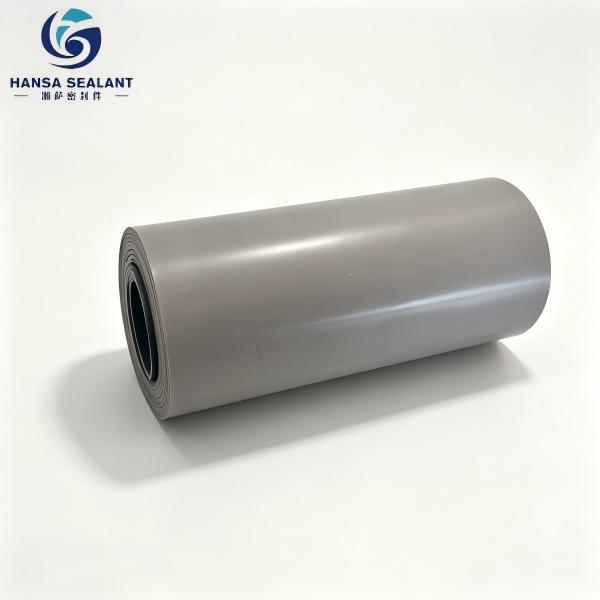
Brown PTFE single-sided sodium-etched film, also known as single-side activated polytetrafluoroethylene film, is a functional specialty polymer film produced by modifying a high-purity virgin polytetrafluoroethylene (PTFE) film substrate through a chemical sodium-etching activation process. One side of the product presents a uniform brown activated layer, while the other side retains the virgin white PTFE surface. This design resolves the industry pain point that ordinary PTFE films have extremely low surface energy, cannot be bonded, and are difficult to laminate.
Core production method: a mature liquid-phase sodium-naphthalene chemical modification process is adopted. A precisely formulated sodium-etching solution is applied to controllably etch and activate one side of the PTFE film, breaking the carbon-fluorine bonds on the film surface and generating abundant active functional groups. This is followed by a full set of processes including multi-stage pure-water rinsing, neutralization, drying, conditioning and slitting, which thoroughly remove residual chemicals and ensure a uniform and stable activated layer, while strictly protecting the untreated substrate side and fully preserving the excellent native properties of PTFE. The final output is a specialty functional film with a bondable single side and differentiated performance on the two faces.
2. Physical & Chemical Properties
This product combines the excellent physical and chemical properties of the PTFE substrate with single-side activated bonding performance. It is stable and adaptable to a wide range of working conditions. The specific parameters and characteristics are as follows:
| Property Category | Specific Parameters / Characteristics |
| Temperature Resistance | Continuous service over -200°C to 260°C, with short-term resistance up to 300°C; no deformation, cracking or performance degradation under high-low temperature cycling, and excellent dimensional stability |
| Corrosion Resistance | Extremely strong chemical inertness; resistant to most strong acids, strong alkalis, strong oxidizers, organic solvents, oils and other media. Only molten alkali metals may have a slight effect, making it suitable for demanding chemical corrosion conditions |
| Electrical Insulation | Low dielectric constant, high breakdown voltage and extremely low dielectric loss; stable insulation over a wide temperature and frequency range, non-conductive and leak-proof, making it a high-quality electrical insulating material |
| Friction & Wear Resistance | The non-activated virgin surface has an extremely low friction coefficient, offering excellent self-lubrication, anti-sticking and wear resistance, with low noise and low wear during operation, effectively reducing mechanical component loss |
| Bonding & Adhesion | After single-side sodium etching, surface energy is greatly increased, enabling strong bonding to epoxy resin, polyurethane, pressure-sensitive adhesive, rubber, metal, plastic and other substrates, with high bond strength and no delamination |
| Weather & Aging Resistance | Resistant to UV, atmospheric aging and damp heat; no cracking, chalking, discoloration or performance decay under long-term outdoor and complex environments, with a long service life |
| Barrier & Sealing Performance | Very low water vapor and gas permeability, providing excellent sealing and barrier capability, effectively blocking medium penetration and fitting a wide range of sealing and protective lamination scenarios |
3. Typical Application Fields
Leveraging the differentiated dual-side performance advantages, the product is widely used in high-end manufacturing, precision engineering, specialty protection and many other fields. The specific application scenarios and roles are as follows:
| Application Field | Specific Application Scenarios | Core Role |
| Aerospace | Aircraft cable wrapping, aircraft sealing gaskets, spacecraft component lamination liners, onboard equipment insulation parts | Enables firm bonding between the film and metal components, providing high/low-temperature resistance, insulation and heat isolation, cushioning and sealing, and corrosion protection for demanding aerospace conditions |
| Precision Medical | Medical device diaphragms, corrosion-resistant liners for medical equipment, insulation gaskets for precision instruments, lamination layers of single-use medical components | With biological inertness, non-toxicity and resistance to medical fluid corrosion, it bonds and assembles stably, keeping medical equipment safe, clean, corrosion-resistant and easy to clean |
| Chemical Engineering | Chemical equipment lining, pipe sealing parts, reactor anti-corrosion liner layers, protective films for acid/alkali storage tanks | Firmly adheres to carbon steel and stainless steel substrates, blocking corrosion from acids, alkalis and organic solvents, solving rust and wear issues in chemical equipment and extending service life |
| Electronics & Electrical | Lithium battery insulation parts, flexible circuit board isolation films, electrical sealing insulation gaskets, high-end cable insulation layers | Provides stable high-temperature-resistant insulation protection, enables precision assembly through bonding and fixing, prevents leakage and short circuits, and improves the safety and stability of electronic products |
| Mechanical Sealing | Wear-resistant gaskets for pumps and valves, mechanical sliding parts, rubber composite sealing parts, anti-sticking liner films for automated equipment | Uses self-lubricating, anti-sticking properties to reduce mechanical friction loss, while single-side bonding enables composite fixing, improving sealing and wear resistance and lowering equipment maintenance cost |
4. Selection & Design Guide
Based on common industry working conditions and frequent customer needs, standardized models, dimensions and matching scenarios are provided below. Customers can make an initial selection according to service temperature, pressure, working medium and bonding substrate; special specifications can be customized.
Model
Standard Thickness
Standard Width Range
Standard Roll Length
Suitable Working Conditions
PTFE-Na-005
0.05 mm
10–1200 mm
100 m/roll
Lightweight lamination scenarios, suitable for electronic insulation, precision instrument liners, light-load bonding lamination and ultra-thin sealing parts
PTFE-Na-008
0.08 mm
10–1200 mm
100 m/roll
Universal best-selling model, suitable for regular gasket lamination, ordinary chemical anti-corrosion lining, electrical insulation parts and general mechanical sealing, with the best cost performance
PTFE-Na-010
0.10 mm
10–1200 mm
100 m/roll
Medium-load wear scenarios, suitable for mechanical sliding parts, medium-pressure sealing parts, thicker insulation protection and frequent-friction conditions
PTFE-Na-020
0.20 mm
10–1000 mm
50 m/roll
Heavy-load demanding conditions, suitable for anti-corrosion lining of heavy chemical equipment, high-pressure sealing assemblies and high-temperature, high-strength wear-resistant parts
Selection notes:
1. For pure bonding and lightweight precision assembly, give priority to the thin 0.05 mm and 0.08 mm grades;
2. For wear, pressure-bearing and high-frequency use, give priority to 0.10 mm and thicker grades;
3. For extreme strong-corrosion and high/low-temperature cycling conditions, the 0.20 mm thick grade is recommended;
4. Non-standard width, thickness and length customization is supported to fit automated production equipment.
5. Usage & Maintenance
5.1 Operating Procedures
First distinguish the two sides of the film. The brown side is the activated bonding side and is the only side that can be used for bonding and lamination; the virgin white side has no adhesion. Never mix up the two sides, to avoid bond failure and product scrap. Before bonding, the substrate must be pre-treated — thoroughly ground, degreased, dusted and dried to ensure a clean surface, which significantly improves bond strength and lowers delamination defects. When cutting, use sharp, professional blades and cut at a steady speed to avoid frayed edges, tearing or stretching deformation. For automated lamination equipment, control the tension properly to prevent the film from thinning or losing performance. During processing, avoid contamination of the activated side with dust, oil or water stains, so that impurities never affect the bonding result.
5.2 Storage & Maintenance Requirements
The sodium-etched activated layer has a limited active shelf life. Store in a cool, dry, light-protected and ventilated environment, with storage temperature ≤25°C and humidity ≤60%. Never expose to direct sunlight, high-temperature baking or damp, wet environments, to prevent the active groups from degrading or failing. Keep the product sealed; re-wrap unused rolls to avoid prolonged exposure to air. It is recommended to use the product within 6 months of receipt to ensure optimal bonding performance. Do not keep the product for long periods near corrosive environments such as acids, alkalis or organic solvents, to avoid indirect corrosion affecting product performance.
5.3 Loss-Reduction Tips
During batch production, reserve standard process edges to reduce cutting waste; clean and de-dust processing equipment regularly to avoid contaminating the film; and store properly to effectively extend the active shelf life and reduce material scrap. Overall, these measures reduce production loss, improve production efficiency and increase the finished-product yield.
6. Industry Development Trends
As high-end manufacturing, new energy, precision chemical and aerospace industries upgrade rapidly, the market's demands on specialty fluoroplastic materials — precision, functionality, stability and adaptability — continue to rise. The brown PTFE single-sided sodium-etched film industry is showing three core development trends.
First, refined process upgrading. Traditional simple sodium-etching processes suffer from uneven activation, excessive residue and side-to-side contamination. The industry is gradually iterating toward controllable precise activation, zero residue and high consistency, achieving precisely controllable etching depth and surface energy while balancing bonding performance with the protective performance of native PTFE.
Second, accelerating replacement in high-end scenarios. Traditional ordinary PTFE films and ordinary rubber sealing parts can no longer meet the high/low-temperature, strong-corrosion and high-precision lamination requirements of high-end equipment. With its differentiated performance, single-sided sodium-etched PTFE film is gradually replacing traditional materials to become a core material for high-end insulation, sealing and anti-corrosion lamination scenarios.
Third, popularization of customization and lightweighting. As downstream equipment moves toward miniaturization, precision and automation, standard products can no longer cover all working conditions. Customized sodium-etched films — ultra-thin, ultra-narrow, ultra-high bond strength and resistant to special media — are becoming the mainstream market demand, fitting precision production scenarios in segmented fields.
7. Market Application Expansion
Currently, brown PTFE single-sided sodium-etched film is maturely applied in traditional chemical, mechanical and electronic fields, while continuing to expand into emerging high-end markets, with steadily widening application boundaries.
In the new energy field, it can be extended to energy-storage battery insulation encapsulation, photovoltaic equipment sealing liners and new-energy wiring harness insulation wrapping. Leveraging its high-temperature resistance, insulation and easy bonding, it solves the problems of high-temperature aging, leakage and sealing failure in new-energy equipment.
In the semiconductor precision manufacturing field, it can be used for dust-proof and corrosion-proof liner films of precision equipment and insulation isolation layers of semiconductor components. With its clean, residue-free, corrosion-resistant and highly stable advantages, it fits the stringent dust-free, impurity-free requirements of precision manufacturing.
In the environmental protection equipment field, it can be applied to liners of waste gas/wastewater treatment equipment and environmental anti-corrosion sealing parts, resisting corrosion from acid/alkali wastewater and waste gas, extending equipment service life and reducing maintenance cost.
In the intelligent equipment field, it suits anti-sticking liners and precision transmission wear-resistant parts of automated equipment. Relying on its self-lubricating, wear-resistant and easy-to-laminate properties, it improves the operating stability of intelligent equipment and reduces failure probability.
8. Summary & Conclusion
Brown PTFE single-sided sodium-etched film is a functional specialty fluoroplastic film with significantly differentiated performance. Through the advanced single-side chemical sodium-etching modification process, it fully preserves the excellent physical and chemical properties of the PTFE substrate — high/low-temperature resistance, corrosion resistance, high insulation, self-lubrication and aging resistance — while perfectly solving the core pain point that ordinary PTFE film cannot be bonded or laminated. The product offers stable performance, strong batch consistency and a wide range of suitable working conditions, meeting multi-tier needs from general industry to high-end precision manufacturing.
Backed by reliable product quality, flexible customization capability and extremely low usage loss, this product is already widely used in core fields such as chemical, mechanical, electronic, medical and aerospace, and continues to expand into emerging high-end markets including new energy, semiconductors and intelligent equipment. Through standardized storage, processing and usage, the product performance can be maximized, helping customers improve finished-product quality while reducing production loss and maintenance cost. In the future, as the process continues to upgrade and application scenarios keep widening, single-sided sodium-etched PTFE film will become an indispensable core sealing, insulation and anti-corrosion composite material in high-end manufacturing, with broad market prospects.


