
Productscpzx

1. Product Introduction
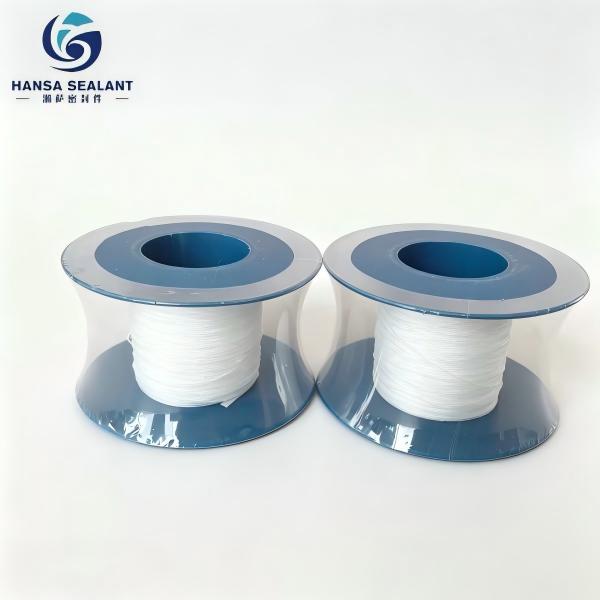
Expanded PTFE round cord (ePTFE round cord) is made of 100% virgin PTFE powder. The manufacturing process includes mixing PTFE powder with lubricant, preforming and extrusion, billet extrusion, high-temperature expansion stretching, lubricant removal, shaping and winding, forming a white flexible sealing cord with continuous microporous fibrous structure inside.
The product is soft with excellent compression and recovery performance. It can adaptively fill irregular gaps under compression and be cut and spliced on-site. Different from traditional braided packing, it is a flexible low-load sealing material widely used for static sealing of flanges, valve stems, equipment housings and precision instruments.
2. Physical & Chemical Properties
Item
Specification
Remarks
Material
100% expanded polytetrafluoroethylene (ePTFE)
Unfilled, binder-free, virgin high-purity raw material
Appearance
Milky white round cord
Dense surface, low fiber shedding
Operating Temperature
-268℃ ~ +260℃
Short-term peak up to 315℃; no embrittlement at low temperature, resistant to thermal aging
Chemical Resistance pH Range
pH 0~14
Resistant to strong acids, strong alkalis and most organic solvents; only attacked by molten alkali metals and high-temperature fluorine gas
Apparent Density
0.6~1.2 g/cm³
Density adjustable according to working conditions, balancing resilience and strength
Electrical Insulation
Excellent, low dielectric loss
Performance barely affected by humidity and frequency, applicable for insulating sealing
Coefficient of Friction
Ultra-low, self-lubricating
Low resistance for reciprocating valve stem movement, less likely to scratch shaft surface
Compression & Recovery
Good, compensates minor deformation and scratches on sealing faces
Better creep resistance than solid PTFE rods
Biocompatibility
Food/medical grade meets FDA non-toxic requirement
No extraction, suitable for clean service
Aging & Weather Resistance
UV-resistant, stable performance during long-term storage
Non-oxidizing, non-embrittling
3. Typical Application Fields
Application Field
Application Position
Function Description
Chemical & Petrochemical
Reaction kettles, pipe flanges, pump & valve stuffing boxes
Resist leakage of corrosive media and ensure continuous & safe operation of chemical equipment
Pharmaceutical & Food
Pharmaceutical tanks, food transfer pipelines, sterile vessel flanges
Clean and non-toxic, prevents medium contamination, meets hygienic sealing requirements
Aerospace
Cryogenic pipelines, instrument housings, precision aircraft interfaces
Maintain airtightness under alternating high & low temperature and adapt to extreme temperature variation
Power Engineering
Desulfurization units, acid & alkali pipelines, auxiliary equipment flanges in power plants
Resist leakage of flue gas, acidic and alkaline corrosive media
Marine & Offshore
Marine valves, seawater pipelines, cabin sealing
Resist salt spray corrosion from seawater and prevent seawater leakage
Precision Instruments & Semiconductors
Sensors, micro analytical equipment, optical components, analytical instruments
Sealing of micro gaps, high purity and no impurity precipitation
Cryogenic Engineering
LNG, liquid nitrogen, liquid oxygen cryogenic equipment pipelines
Retain flexibility under cryogenic conditions and maintain low-temperature sealing performance
4. Selection & Design Guidelines
Core selection principle: The cord diameter shall be slightly larger than the sealing gap. Standard installation compression ratio is 30%~50%; for ultra-fine grades, compression ratio shall be controlled at 25%~40%. Product selection is mainly based on sealing gap, medium, temperature and pressure.
Model
Diameter Range
Max Working Pressure
Recommended Application Scenarios
EPTFE-R00
<1 mm
≤6 MPa
Micro sensors, micro analytical instruments, precision optical parts, sealing for ultra-small gaps
EPTFE-R01~R04
1~4 mm
≤10 MPa
Instrument connections, small valves, equipment sight glass sealing
EPTFE-R05~R10
5~10 mm
≤16 MPa
Pipe flanges, pump & valve packing, sealing for food & pharmaceutical equipment
EPTFE-R12~R20
12~20 mm
≤20 MPa
Large reaction kettles, large-diameter flanges, cryogenic pipelines, sealing for wide gaps
Additional selection notes:
1. For strong oxidizing media and continuous high-temperature working conditions, select high-purity virgin grade preferentially.
2. For direct food/pharmacy contact, specify FDA-certified grade.
3. For rough or scratched sealing surfaces, choose larger diameter to improve defect compensation capacity.
4. Non-standard diameters are available for custom production; special density grades can be customized upon request.
5. Operation & Maintenance
5.1 Installation Points
5.1.1 Sealing surface preparation: Clean flanges and stuffing boxes to remove rust, old sealing residues and burrs. Sharp burrs may cut the cord and shorten service life.
5.1.2 Compression control: Over-compression is prohibited, which will accelerate creep and cause sealing failure. Tighten bolts evenly in diagonal multiple passes to avoid uneven loading.
5.1.3 Cutting & jointing: Cut with sharp cutter for smooth incision. For butt sealing, cut ends in diagonal lap joint rather than flat butt joint to avoid leakage paths. Do not stretch ultra-fine cord during cutting to prevent cross-section thinning and failure.
5.1.4 Medium compatibility check: Not suitable for molten alkali metals and high-temperature fluorine gas. Verify medium compatibility before formal application.
5.2 Maintenance & Storage
5.2.1 For systems with fluctuating pressure and temperature, carry out regular inspection. For minor leakage, check bolt preload first instead of over-tightening at one time.
5.2.2 Store product in dark and normal temperature with original coil packaging. Avoid long-term sunlight exposure and pulling. Do not repeatedly unwind and rewind ultra-fine cord to prevent deformation.
5.2.3 During maintenance disassembly, carefully remove old cord to avoid scratching equipment sealing faces. Replace with brand-new expanded PTFE round cord for re-assembly; do not reuse aged compressed cord.
5.3 Tips for Loss Reduction
Proper selection plus compression control can greatly extend sealing service life, reduce shutdown maintenance frequency and lower overall operation & maintenance cost.
6. Development Trend
6.1 High-purity & miniaturization: Iteration of ultra-fine diameter and ultra-low extraction grades to meet high-cleanliness scenarios such as semiconductors, precision testing and medical implant devices, with stricter requirements on raw material purity and dimensional tolerance.
6.2 Modified composite upgrading: Develop reinforced ePTFE round cord to improve creep resistance and high-pressure resistance for alternating fatigue and high-pressure working conditions; develop lightweight low-creep special grades.
6.3 Green & low-carbon manufacturing: Optimize production process to reduce additive emissions, and develop recyclable ePTFE solutions to meet bidding requirements for environmental-friendly and low-carbon projects.
6.4 Integrated customization: Provide prefabricated sealing rings, fixed-length cutting and one-stop services to reduce on-site processing workload and improve assembly consistency.
6.5 Standardized inspection: Establish full-item batch inspection system. Standardize physical property, dimension and cleanliness test reports to meet access requirements of high-end equipment, military and aerospace industries.
7. Market Application Expansion
Traditional markets mainly focus on chemical industry, power and general industrial flange sealing. Future development will target high-end emerging sectors:
1. New Energy: Sealing for hydrogen storage & transportation flanges, energy storage battery insulation, LNG storage and transportation equipment, leveraging its wide temperature range and corrosion resistance.
2. Semiconductor: Sealing for high-purity fluid pipelines and micro gaps of vacuum equipment, meeting requirements of low ion precipitation and particle-free contamination.
3. High-end Medical Equipment: Sealing for sterile pipelines and medical instrument housings with biocompatible high-purity grades.
4. Precision Equipment & Scientific Research Devices: Sealing for laboratory cryogenic equipment, vacuum instruments and micro sensors.
5. Export Foreign Trade: Supporting chemical equipment in Europe, America, Middle East and Southeast Asia. It acts as an import-substitute sealing material with stable batch performance and complete specifications.
For marketing, supply matched selection solutions for equipment OEM manufacturers. Shift from simply selling materials to integrated sealing solutions, and provide medium compatibility test and on-site technical guidance.
8. Summary & Conclusion
With unique microporous expanded structure, expanded PTFE round cord integrates outstanding chemical resistance, wide temperature tolerance, low friction, compression recovery and non-contaminating features. It serves as an ideal flexible static sealing material for corrosive, high/low temperature, clean and precision equipment applications.
Compared with braided packing and solid PTFE rods, it has obvious advantages including low clamping force sealing, no damage to brittle flange surfaces and on-site formability, especially for complex irregular gap sealing. Our product portfolio covers ultra-fine diameter below 1mm up to 20mm, adopting virgin high-purity raw materials with stable batch quality, satisfying sealing demands of traditional industries as well as high-end sectors such as new energy, semiconductors, pharmacy and aerospace.
With continuous growth of domestic high-end equipment and new energy industries, the demand for ePTFE sealing materials keeps rising. Through refined model selection and standardized installation & maintenance, expanded PTFE round cord effectively reduces equipment leakage risk, cuts shutdown repair work and helps customers reduce full-lifecycle cost. With material modification and process upgrading in the future, this product will keep expanding more high-value application scenarios and provide reliable sealing guarantee for safe and stable operation of equipment in various industries.


