
Productscpzx

1. Product Introduction
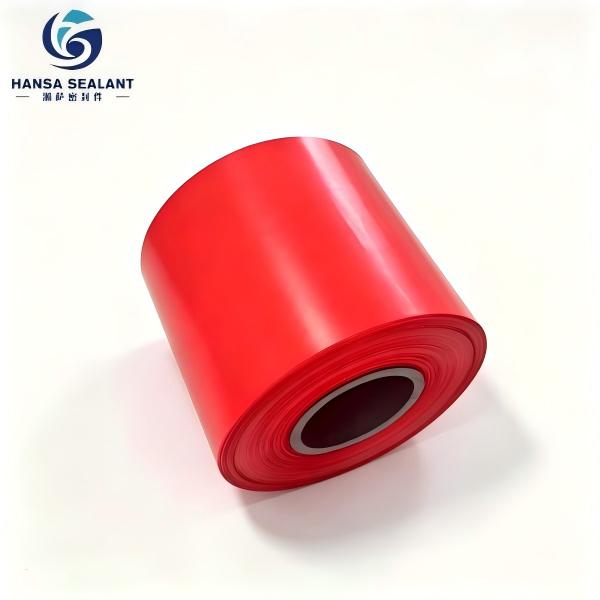
Red single-sided sodium etched PTFE film uses polytetrafluoroethylene (PTFE) resin as raw material. It is manufactured via calendering and sintering to form base PTFE film, followed by a one-sided sodium etching activation process to modify one surface of the film.
The sodium-treated side breaks the inherent surface inertness of PTFE and achieves good bonding performance, while the untreated side retains the original non-stick property of PTFE. Red pigmentation helps quickly identify the activated bonding side. It is specially designed for composite bonding of various materials.
2. Physical & Chemical Properties
Item
Performance Parameter
Continuous Working Temperature
-200℃ ~ 260℃
Chemical Resistance
Resistant to acids, alkalis, organic solvents and strong oxidants with high chemical inertness
Electrical Insulation
Excellent, barely affected by temperature and humidity changes
Friction Characteristic
Low friction coefficient with self-lubricating property
Dimensional Stability
Low thermal expansion coefficient, minimal deformation under temperature fluctuation
Bonding Performance
The sodium-activated side can firmly bond with metals, resins and fiberglass materials
Surface Feature
One side activated for bonding; the other side remains non-stick
3. Typical Application Fields
Industry
Application Parts
Function
Aerospace
Composite laminates
Structural bonding, weight reduction, temperature & corrosion resistance
Medical Equipment
Polymer composite assemblies
Medium isolation, chemically resistant bonding
Chemical Engineering
Anti-corrosion lining for equipment
Anti-corrosion sealing, composite bonding of lining plates
New Energy Industry
Insulation composite panels
High-temperature insulation, lamination bonding
Electrical & Electronics
Flexible sealing gaskets
Insulation, anti-aging bonding
4. Selection & Design Guidelines
Select thickness according to composite process, pressure and temperature resistance requirements. Custom slitting of width available, supplied in rolls or sheets.
Common Thickness
Recommended Application
Product Form
0.05 mm
Thin composite materials, flexible fitting, lightweight lamination
Roll / Sheet
0.08 mm
General purpose, mainstream choice for composite lamination
Roll / Sheet
0.10 mm
Wear-resistant structural parts, sealing gaskets, structural composite
Roll / Sheet
0.20 mm
Heavy-duty working conditions, composite for chemical anti-corrosion lining
Roll / Sheet
Selection Tips:
1. Thin grades are preferred for lightweight multi-layer composites; thick grades suit pressure-bearing and wear-resistant conditions.
2. Bonding shall only be performed on the sodium-activated side. Mark the bondable side on design drawings.
3. Width can be precision-slit as requested, minimum slitting width negotiable.
5. Usage & Maintenance
1. Distinguish front and back sides: Only the sodium-activated side can be used for bonding. The opposite side has no bonding capacity. Identify the red marked surface before processing to avoid misuse and waste.
2. Surface protection: Prevent oil, dust and water stains on the activated surface. Contaminants will greatly reduce bonding strength. Keep processing environment clean to improve finished product yield.
3. Validity period control: The sodium-activated layer has a limited activity life. It is recommended to use up within 6 months after delivery. Activity decay over time will impair bonding effect.
4. Storage conditions: Store at room temperature away from light, heat sources and UV exposure. Do not stack under heavy pressure to prevent film wrinkles and failure of activated layer.
5. Cutting processing: Sharp cutting tools are recommended for smooth cuts to avoid edge fuzzing that affects composite results.
6. Development Trend
1. Continuous optimization of activation process: Sodium etching technology develops toward higher environmental friendliness and more uniform activated layer, improving batch stability and lowering bonding defect rate.
2. Ultra-thinning and precision: Market demand grows for thinner, narrow-width and high-precision slit products, matching microelectronics and lightweight aerospace composite materials.
3. Integrated composite supporting service: Evolving from simple film supply to integrated processing including film, die cutting and adhesive coating, reducing customers’ secondary processing steps.
4. Iteration of environmentally friendly modification technology: Low-pollution surface activation solutions are being developed to meet environmental compliance requirements for medical and high-end equipment industries.
7. Market Application Expansion
Traditionally applied mainly in chemical anti-corrosion and aerospace composite fields. In recent years, applications keep expanding to new energy energy storage, lithium battery insulation, semiconductor auxiliary materials and high-end medical devices.
With the popularization of lightweight composite materials, this product gradually replaces part of traditional bonding liner films. It also has large potential markets in rail transit and ship anti-corrosion composite parts.
Custom thickness, color and slitting sizes are available for different industries. Small-size samples can be developed to quickly match testing requirements of emerging industries and tap more segmented scenarios.
8. Summary & Conclusion
Red single-sided sodium etched PTFE film solves the industry pain point that virgin PTFE is hard to bond. While retaining PTFE’s outstanding properties including high temperature resistance, corrosion resistance and insulation, stable composite bonding is realized through one-sided sodium modification.
Rich product specifications and custom cutting services are available. It has been widely adopted in aerospace, medical, chemical, new energy, electronics and other industries.
Driven by the rapid development of composite material industry, market demand for single-sided sodium etched PTFE film keeps rising. We can provide sample testing, selection support and supporting processing services to help customers deliver composite material projects steadily.


